Adjuster Aerial Photo Timestamp Overrides Homeowner Fire Damage Log
You document every detail after a house fire: the time flames appeared, when the fire department arrived, the moment you first surveyed the damage. You log it at 3:15 PM, sure of the sequence. Then the adjuster pulls an aerial image timestamped 2:47 PM showing the roof already collapsed. Your log, your memory, your word—suddenly secondary. The claim shifts from payout to investigation. This scenario is becoming more common as insurers rely on digital evidence that policyholders rarely know exists until it counts against them.
A Single Timestamp Can Unravel a Fire Claim
Homeowners typically assume that their own records—photos they took, notes they jotted down—carry weight in a claim. But when an adjuster's aerial photo shows damage at a time before the homeowner reported it, the insurer's fraud unit often gets involved. The discrepancy suggests the damage may have occurred earlier, possibly before the policy was in force, or that the homeowner exaggerated the timeline to claim newer items.
Adjusters treat policyholder logs as secondary evidence for a simple reason: logs are created after the fact, often from memory, and can be influenced by stress or wishful thinking. Aerial images, by contrast, are captured by drones or satellites with embedded metadata—GPS coordinates, precise timestamps, and sometimes even altitude and camera angle. That metadata is hard to dispute.
In one recent case, a homeowner in Colorado reported a fire that started from a faulty dryer vent. He logged the time of the fire at 2:30 PM, based on when he smelled smoke. The adjuster's aerial image from a routine neighborhood surveillance drone showed smoke rising at 1:55 PM. The insurer denied the claim, citing a material misrepresentation of the loss timeline. The homeowner is still fighting the decision.
Policyholders rarely know that timing matters until it is too late. Standard homeowners policies require prompt notice of a loss, but they also contain clauses that void coverage if the insured exaggerates or misrepresents any fact. An unintentional error in a timeline can be treated as fraud if the adjuster has contrary digital evidence.
Why Aerial Imagery Now Dominates Property Adjusting
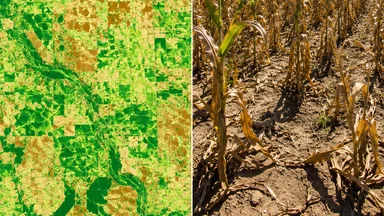
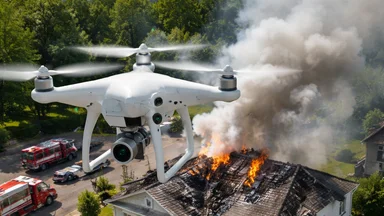
Drones and satellites have transformed property adjusting over the past decade. After a major loss—fire, flood, hurricane—insurers dispatch drones to capture high-resolution images of the damage from above. These images are then compared with pre-loss aerial photos, often sourced from third-party vendors like Nearmap or EagleView, to create precise before-and-after overlays.
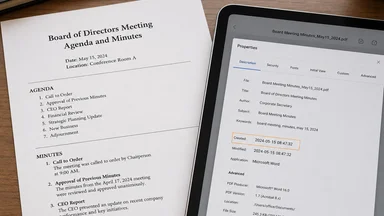
The metadata embedded in each image includes not only the timestamp but also the GPS location, the drone's flight path, and sometimes even the weather conditions at the moment of capture. This makes the evidence difficult to challenge in court. Courts have generally accepted aerial timestamps as reliable, provided the chain of custody is documented.
Third-party vendors have become essential to this process. Companies such as Geospatial Intelligence and Vexcel Imaging maintain vast libraries of aerial imagery, updated regularly for many urban and suburban areas. When a claim is filed, the adjuster can request the nearest available image before and after the loss date. In some cases, the vendor's image predates the policy inception, allowing the insurer to argue that the damage existed before coverage began.
Insurers also use aerial imagery to detect fraud in staged losses. If a homeowner claims a tree fell on the roof during a windstorm, but the aerial image shows the tree already down before the storm, the claim is denied. The same logic applies to fire damage: if the roof is gone in an image taken before the reported fire time, the timeline is broken.
The Fine Print That Lets Insurers Override Your Record
Standard homeowners insurance policies contain several provisions that give insurers latitude to question your timeline. The most common is the requirement to give prompt notice of a loss. While prompt is not defined in days, a delay of even a few hours can be used to question the validity of the claim if the adjuster has contrary evidence.
More powerful is the duty to cooperate clause. This requires the policyholder to provide all information the insurer requests during the investigation. If the adjuster asks for your phone's location history, social media posts, or even the raw files from your camera, you must comply. Refusal can be grounds for denial.
Exaggeration clauses are the nuclear option. These void coverage if the insured intentionally misrepresents any material fact. A misstated time can be considered material because it affects the investigation of cause and origin. If the insurer can show that the timeline was false—even if the error was innocent—they can deny the entire claim.
Insurers may also demand digital proof of your timeline. Some adjusters now ask policyholders to provide a time-stamped video walkthrough of the damage, taken immediately after the loss. If you cannot produce it, your written log carries less weight. The burden shifts to you to prove that your account matches the digital record.
How One California Fraud Case Illustrates the Shift
In June 2026, a California man named Ken Pham Tran was convicted of insurance fraud after claiming road rage damage to his car. Tran told Progressive Insurance that another driver had rammed his vehicle during a road rage incident. But the adjuster used aerial imagery from a nearby traffic camera to show that Tran's car had already been damaged before the alleged incident occurred.
The Santa Clara County District Attorney's office prosecuted the case, and Tran was found guilty. The case made headlines in part because it showed how insurers are investing heavily in forensic technology to catch fraud. Progressive, like many carriers, now has a dedicated unit that reviews aerial and video evidence before paying claims.
This case is not isolated. Similar convictions have occurred in Florida and Texas, where insurers used satellite imagery to disprove hail damage claims. In each instance, the policyholder's own log or testimony was contradicted by a timestamped image. The courts sided with the digital evidence, citing its reliability and objectivity.
The lesson for policyholders is clear: your word alone may not be enough. Insurers are no longer willing to take a claimant's timeline at face value when a more precise digital record exists. And as the technology becomes cheaper and more widespread, this trend will only accelerate.
Regulators Begin to Scrutinize Digital Evidence Overreach
As aerial imagery becomes more common in claims handling, regulators are starting to ask questions. In June 2026, Pinpoint UK Solutions, a specialist firm that audits adjuster methods, received authorization from the Financial Conduct Authority (FCA) to operate as a directly authorized company in the UK market. This move signals that regulators are paying attention to how insurers use digital evidence.
State insurance departments in the US have also fielded complaints from consumers who say their claims were denied based on aerial images they never saw. Some departments now require insurers to disclose when they use third-party imagery and to provide the raw metadata to the policyholder upon request. Consumer advocates argue that metadata can be manipulated or misinterpreted, and that policyholders deserve a chance to challenge it.
The issue of metadata handling is particularly thorny. Timestamps can be affected by camera clock errors, time zone settings, or even deliberate tampering. While most aerial imagery vendors have strict quality controls, errors do occur. A 2024 study by the University of Texas found that drone timestamps could be off by as much as 15 minutes due to GPS drift, especially in urban canyons.
Disclosure rules for aerial sources are emerging slowly. In California, a bill introduced in early 2026 would require insurers to provide policyholders with copies of any aerial images used in claim decisions, along with a plain-language explanation of how the timestamp was verified. The bill has not yet passed, but it reflects growing unease with the imbalance of technological power between insurers and claimants.
Three Steps to Protect Your Claim Against Timestamp Conflicts
First, photograph the damage immediately with your phone, and make sure your phone's camera app is set to embed location and time stamp data. Most smartphones do this by default, but check your settings. The metadata on your photo can serve as a counterpoint to the adjuster's aerial image if the times are close.
Second, keep a written log that includes not just the time of the loss but also the times of key events: when you called the fire department, when you took photos, when you contacted your insurer. If possible, have a witness sign your log. Witnesses can corroborate your timeline, especially if they are independent of the loss.
Third, if the adjuster questions your timeline, request a copy of the raw aerial files they used. Under most state laws, you are entitled to see the evidence the insurer is relying on. If the metadata shows a timestamp that seems off, you can hire an expert to examine it for errors. A public adjuster can also help you navigate this process and negotiate with the carrier.
Ultimately, the best defense is to be proactive. Do not assume your word will be accepted. Treat every claim as if you will need to prove every detail with digital evidence. The insurance industry has shifted toward objective data, and policyholders must adapt to protect their interests.
Trade-Offs and Counter-Arguments: When Aerial Evidence Is Not Infallible
While aerial imagery is powerful, it is not always the unassailable truth that insurers claim. One key trade-off is the timing of the image relative to the loss. A satellite or drone may capture an image hours or even days after the loss, but the timestamp reflects only the moment of capture, not the moment the damage occurred. If the adjuster uses a post-loss image to infer the timeline, they may be making assumptions about when the damage happened that are not supported by the data.
Another counter-argument is that aerial imagery can be misleading due to perspective. A roof that appears collapsed from above might actually be a shadow or an optical illusion. In one case in Florida, a homeowner successfully challenged a denial by showing that the aerial image the insurer used was taken at an angle that made a pre-existing sag in the roof look like new collapse damage. The adjuster had not visited the site in person, relying solely on the image.
Furthermore, the chain of custody for aerial images is not always airtight. If the image is obtained from a third-party vendor, there may be gaps in how the data was handled. A 2023 report by the National Association of Insurance Commissioners noted that some vendors do not maintain detailed logs of who accessed the images or when, making it difficult to verify that the image used in the claim is authentic and unaltered.
Policyholders can also argue that the insurer's reliance on aerial imagery violates the principle of good faith and fair dealing. If the adjuster never inspects the property in person and bases a denial solely on a timestamp, the policyholder may have grounds for a bad faith lawsuit. Several state courts have ruled that insurers must conduct a thorough investigation, which includes considering the policyholder's evidence, not just digital data.
How Public Adjusters Can Level the Playing Field
Public adjusters are independent professionals who represent policyholders in claims negotiations. They are licensed in most states and can be a powerful ally when aerial imagery conflicts with your timeline. A public adjuster will review the adjuster's evidence, including the aerial images and metadata, and look for errors or inconsistencies.
For example, a public adjuster might discover that the timestamp on the aerial image is in a different time zone than the one used by the policyholder. Or they might find that the image was taken from a vendor library and not specifically for the claim, meaning the timestamp may not correspond to the loss event at all. In one case in Texas, a public adjuster successfully argued that the aerial image the insurer used was from a routine flyover two weeks before the loss, not after it, and that the damage shown was from a previous storm that the homeowner had already repaired.
Public adjusters also have access to experts who can analyze metadata for manipulation. While outright tampering is rare, it does happen. In a 2025 case in Ohio, an adjuster was found to have altered the timestamp on a drone image to make it appear the damage occurred before the policy period. The public adjuster hired a forensic analyst who detected the alteration, and the insurer paid the claim plus penalties.
Hiring a public adjuster is not free—they typically charge a percentage of the claim payout, often in the range of 10–15%. But for large claims, that fee can be worth it if it prevents a denial. Policyholders should weigh the cost against the potential loss of coverage.
What to Do If Your Claim Is Denied Based on Aerial Imagery
If your claim is denied or flagged for investigation due to a timestamp conflict, do not panic. First, request all evidence the insurer used, including the raw aerial files and metadata. The insurer is required to provide this under most state laws. If they refuse, file a complaint with your state insurance department.
Second, consult with a public adjuster or an attorney who specializes in insurance bad faith. They can help you understand whether the denial is legitimate or whether the insurer is overreaching. In many cases, a strongly worded letter from a lawyer can get the claim reopened.
Third, gather your own digital evidence. If you have photos or videos from the time of the loss with intact metadata, provide them to the adjuster. If your phone's location history shows you were at home at the time you reported the fire, that can corroborate your timeline. Social media posts, text messages, and emails can also help establish the sequence of events.
Finally, consider filing a complaint with the Consumer Financial Protection Bureau or your state's attorney general if you believe the insurer acted in bad faith. While these agencies may not resolve individual claims, they can investigate patterns of misconduct and put pressure on the insurer to settle.
This article is for informational purposes only and does not constitute legal or professional advice. Consult a licensed insurance professional or attorney for guidance specific to your situation.