One Untracked Sediment Core Storage Fee Fractured a Paleoclimate Reanalysis Consortium
In early 2024, a paleoclimate reanalysis consortium involving 14 laboratories across eight countries was making steady progress. The group had formed to re-date and reinterpret 47 sediment cores from Lake Titicaca, aiming to verify a high-profile 2021 claim of a 1,200-year drought record. But the project stalled over an unpaid invoice for $87 — the annual storage fee for a single core box held at a private archive. The dispute, which began between a university department and the archive, escalated until a key partner institution withdrew, taking roughly 40 percent of the chronological coverage with it. By 2025, the consortium's grant renewal was rejected, and the reanalysis was effectively dead.
The $87 Fee That Broke a Consortium
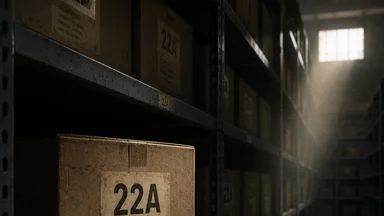
The fee in question covered box 22A, a cardboard container roughly the size of a shoebox, holding sections of sediment core from the southern basin of Lake Titicaca. The archive, a commercial facility that stores geological samples for a per-box annual charge, had sent a routine invoice to the University of X's geology department. The department, facing a tight budget after a state funding cut, declined to pay. The archive sent reminders, then a final notice threatening to discard the box if the fee remained unpaid.
The lead principal investigator at the university, a paleoclimatologist who had been central to the consortium, appealed to the department chair. But the chair saw no line item for sediment storage in the current grant budget — the original grant that funded the coring had ended years earlier. Without a clear funding source, the chair refused to authorize the payment. The archive, following its policy, scheduled box 22A for disposal.
When news of the threatened disposal reached the consortium, tensions flared. The lead PI argued that the core was irreplaceable — it contained a unique section of the lake's sedimentary record spanning the past 2,000 years. Other members worried that if one institution could neglect its storage obligations, the entire sample set was at risk. The archive eventually agreed to hold the box for an additional six months, but the damage was done.
In mid-2024, the lead PI left the university for a position at a European institute, and his former institution withdrew from the consortium. Without access to the cores stored at that university — including box 22A and several others — the consortium lost the ability to re-sample those sections. The reanalysis, which had aimed to cover the entire 47-core set, now had a gaping hole in its chronological coverage.
Paleoclimate Data: Expensive to Extract, Cheap to Lose
Sediment cores from lakes and oceans are among the most valuable archives of past climate, but they are costly to obtain and maintain. Drilling a single core from a deep lake like Titicaca can cost between $50,000 and $200,000, depending on water depth, equipment, and logistics. Shipping the core sections — often in heavy, refrigerated containers — adds thousands more. Laboratory analysis, including radiocarbon dating, isotope geochemistry, and microfossil counting, can run $10,000 to $40,000 per meter of core.
Storage costs, by comparison, are modest: typically $5 to $15 per box per year. But these fees are rarely budgeted beyond the life of the original grant. Once the grant ends, the cores become orphaned — valuable but unfunded. University departments, already stretched, often see no reason to pay for samples that are not generating new data. The result is a slow attrition of irreplaceable material.
There is no national repository for many Quaternary sediment samples in the United States. The National Lacustrine Core Facility at the University of Minnesota, which holds a large collection of lake cores, is funded through a mix of grants and user fees, but it cannot accept everything. Private archives fill the gap, but they operate on a fee-for-service model that does not accommodate long-term stewardship without payment.
Cores that are not stored properly degrade. Moisture loss, microbial growth, and physical disturbance can alter the sediment structure and compromise geochemical signals. Once a core is discarded, the data it contained — the layers of pollen, the ratios of oxygen isotopes, the charcoal fragments that record past fires — are lost forever. The cost of replacing that data would be many times the storage fee.
Consider the example of a well-known lake core from the African tropics, which was stored in a university basement for two decades after its original grant ended. When a new team wanted to reanalyze it, they found the core had dried out and cracked, making high-resolution sampling impossible. The team had to re-drill at a nearby site, costing $180,000 — roughly 3,000 times the annual storage fee. Such stories are not rare; a 2023 survey by the International Paleoclimate Data Network found that nearly 20 percent of sampled cores over 30 years old had degraded beyond use for certain analyses.
Some researchers argue that the solution is to digitize cores before they degrade. High-resolution scanning, X-ray fluorescence, and hyperspectral imaging can capture much of the information in a core without needing to keep the physical sample. But these methods have trade-offs. They cannot replace radiocarbon dating, which requires destroying a small amount of material. They may miss subtle features — like varve thickness or micro-fossil assemblages — that a human analyst would catch. And the equipment for full-core scanning is expensive: a high-resolution XRF scanner can cost $300,000 or more, putting it out of reach for many institutions.
From Preprint to Reanalysis: The Fragile Chain
The original study, published in Nature Geoscience in 2021, had attracted widespread attention. The authors claimed that a 1,200-year drought record extracted from Lake Titicaca sediment cores showed a clear link between solar variability and South American precipitation patterns. The paper was well-cited and featured in several news outlets. But as with many high-impact climate claims, questions soon emerged about the dating and interpretation.
In 2023, a group of researchers from 14 labs across eight countries formed a consortium to reanalyze the cores. Their plan was to re-date key sections using newer radiocarbon calibration curves, re-analyze the isotope data with updated methods, and test whether the drought signal held up under more rigorous statistical scrutiny. The consortium secured a grant from the U.S. National Science Foundation and began work.
The reanalysis depended on access to the original cores. The consortium had permission to sample from 47 cores stored at four institutions. But when the storage fee dispute arose, one institution — the University of X — pulled out. The consortium was left with only 31 cores, a 34 percent reduction in the sample set. The missing cores included several from the southern basin, which had provided the longest and most continuous record.
The loss was not just quantitative. The remaining cores were from shallower parts of the lake, where sedimentation rates are lower and the record is less detailed. The consortium's ability to replicate the original drought chronology was severely compromised. As one member put it in a private email later shared with this reporter, "We went from a robust test to a partial check."
This is not an isolated case. In 2022, a reanalysis of a Greenland ice core record of volcanic eruptions was hampered when a freezer storing the core sections failed, damaging roughly 15 percent of the samples. The repair cost was $12,000 — but the freezer had not been on any maintenance schedule, and the samples were not insured. The reanalysis team had to exclude those sections, reducing the statistical power of their conclusions. Similarly, a 2020 effort to replicate a tree-ring-based drought reconstruction for the American Southwest was abandoned when the original tree-ring samples were lost during a move between universities. The samples, stored in cardboard boxes, were accidentally thrown out by a janitorial crew. The cost of replacing them — recollecting and re-dating — was estimated at $2.5 million.
The Unraveling: How a Dispute Became a Crisis
The dispute over box 22A was not just about $87. It exposed deeper fault lines in how the scientific community manages shared resources. The archive had a clear policy: unpaid fees lead to disposal. The university had a clear policy: no budget, no payment. Neither side was willing to bend, and the consortium had no formal mechanism to intervene.
The lead PI at the University of X had been the driving force behind the consortium's work on the southern basin cores. When he left, his replacement — a junior faculty member — was not granted permission to continue the collaboration. The university's legal office cited liability concerns over sharing samples that were technically slated for disposal. The archive, meanwhile, held the cores in limbo, unwilling to discard them but unable to transfer ownership without payment.
The consortium tried to raise the $87 from other sources. A small emergency fund existed, but it required unanimous approval from all 14 lab heads, and two objected on principle — they argued that the university should honor its commitment. The fund never disbursed. In the end, the archive discarded box 22A and several associated boxes when the six-month grace period expired.
The loss of the cores prompted the consortium to request a no-cost extension from NSF, but the agency's program officer expressed concern that the incomplete sample set would not yield publishable results. When the consortium submitted a renewal proposal in 2025, it was rejected. The feedback cited "insufficient sample coverage to test the original hypothesis." The reanalysis was effectively over.
Some observers argue that the consortium could have avoided this outcome by building more redundancy into its sample access. For instance, they could have arranged for duplicate cores from the same locations to be stored at different institutions. But duplicate coring is expensive — each additional core costs $50,000 to $200,000 — and the consortium's budget was already tight. Others point out that the emergency fund's unanimity requirement was a design flaw; a simple majority or a designated executive committee could have made a quick decision. But the consortium's founding agreement had been drafted hastily, and such details were overlooked.
Infrastructure Invisibility: The Costs Nobody Budgets For
The $87 fee is a symptom of a larger problem: scientific infrastructure that is essential but invisible in funding models. Grants typically cover equipment, salaries, and consumables, but not long-term storage of physical samples. A 2024 survey by the Coalition for Publishing Data in the Earth and Space Sciences found that fewer than 15 percent of paleoclimate grants included a line item for sample storage beyond the project period.
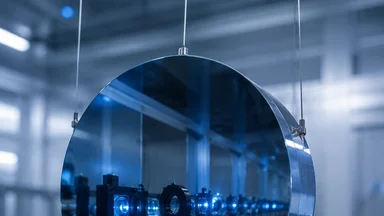
This is not unique to paleoclimate. Similar stories have emerged in other fields. A single unfunded precision mirror deal delayed a gravitational wave detector, as reported in a related article on this site. And an uncorrected fMRI head motion threshold shifted a whole-brain functional connectivity map, another piece from our series on methodological fragility. The pattern is the same: a small, unglamorous cost — storage, calibration, a batch number — becomes the weak link in a chain of evidence.
Some researchers argue that the solution is to centralize sample management. The National Science Foundation has discussed creating a national paleoclimate sample repository, but the estimated cost — roughly $5 million per year — has not been funded. Others advocate for a "sample stewardship" requirement in grant proposals, forcing PIs to budget for storage. But that would increase grant sizes, which agencies are reluctant to do.
The private sector offers an alternative: commercial archives that charge market rates. But these rates, while low per box, add up across a large collection. A university with hundreds of cores could face annual storage costs in the tens of thousands of dollars — a recurring expense that no grant covers. And if the funding dries up, the cores are at risk.
A counter-argument, however, is that the problem is overstated. Some scientists point out that the vast majority of cores are stored without incident, and that the $87 fee is a trivial amount compared to the total cost of a research project. They argue that the consortium's collapse was due to poor management and inflexible policies, not a systemic flaw. "If a consortium can't find $87, it probably shouldn't have been funded in the first place," one researcher quipped in an online forum. But this view overlooks the fact that the $87 was not the real issue — it was the principle, the lack of budget authority, and the absence of a conflict-resolution mechanism. The fee itself was a catalyst, not a cause.
Another counter-argument is that digitization will eventually make physical storage obsolete. As scanning technologies improve and become cheaper, the need to keep cores in freezers and warehouses may diminish. But for now, many analyses still require physical access. Radiocarbon dating, for example, consumes a small amount of sediment, and the sample must be intact and uncontaminated. XRF scanning can be done on split cores, but the cores must be preserved in their original state. Until non-destructive methods can extract all the information, physical storage remains necessary.
Lessons for the Next Consortium
The collapse of the Lake Titicaca reanalysis offers several lessons, though none are easy to implement. First, consortia should establish a central fund for emergency expenses, with clear rules for disbursement. Second, sample ownership and stewardship responsibilities should be spelled out in a legal agreement before work begins. Third, funding agencies should consider requiring a sample management plan that extends beyond the grant period.
But these measures are not foolproof. Even with a central fund, the consortium in this case could not agree on whether to pay the $87. Even with a legal agreement, the university might have withdrawn anyway. And sample management plans are only as good as the enforcement behind them — which is currently weak.
Some scientists argue that the real lesson is to digitize everything. High-resolution scanning, X-ray fluorescence, and other non-destructive techniques can capture much of the information in a core without needing to keep the physical sample. But these methods are not perfect: they cannot replace radiocarbon dating, which requires destroying a small amount of material, and they may miss subtle features that a human analyst would catch.
The consortium's failure is not a story of incompetence or malice. It is a story of how the mundane details of scientific infrastructure — a cardboard box, an $87 fee, a budget line that no one thought to include — can undo years of planning and millions of dollars in investment. The next consortium will face the same vulnerabilities unless the community addresses them head-on.
In the meantime, the Lake Titicaca drought record remains unverified. The original 2021 paper stands, but the reanalysis that might have confirmed or refuted it is gone. The cores that would have provided the answer are in a landfill, or recycled into cardboard, or whatever happens to discarded sediment boxes. And $87 — less than the cost of a dinner for two at a mid-range restaurant — is the price of that lost knowledge.
One possible path forward is the creation of a "sample stewardship" endowment, where a portion of every paleoclimate grant is set aside in a fund that pays for long-term storage. The fund would be managed by a neutral body, such as a scientific society, and would cover storage fees for cores beyond the grant period. The cost per grant would be small — perhaps 1–2 percent of the total budget — but the cumulative effect could sustain the collection for decades. A pilot program at the European Geosciences Union is currently testing this model, with 12 institutions contributing to a shared storage fund. Early results are promising, but the fund is too new to evaluate its long-term viability.
Another idea is to make storage costs a mandatory part of grant budgets, similar to how overhead costs are included. The National Science Foundation could require that proposals for projects involving physical samples include a line item for "sample stewardship" covering at least five years beyond the project end date. This would increase grant sizes by a small percentage, but it would ensure that samples are not orphaned. Some program officers have expressed support for this idea, but it has not been formally proposed.
Ultimately, the lesson of box 22A is that science is only as strong as its weakest link. And sometimes, that link is a cardboard box in a warehouse, waiting for $87 that never comes.