One Unfunded Calibration Lab Closure Biased a Neural Recording Consortium
A graduate student at a midwestern university noticed something odd in the spike-sorting output from her hippocampal recordings. The waveforms looked clean, but the firing rates were consistently lower than expected for the behavioral state she was studying. She checked the electrode impedance logs, a routine quality-control step. The numbers seemed fine — around 0.8–1.2 megaohms, within the typical range. Yet when she compared her data with recordings from a collaborating lab across the country, the same probe model showed a systematic offset. The colleague's impedances were 15 to 25 percent higher.
The discrepancy would eventually trace back to the closure of a single calibration laboratory at a national metrology institute, an event that had occurred quietly, without fanfare, more than a year earlier. That lab had maintained the reference cell used to validate electrode impedance measurements for a multi-site neural recording consortium. Without it, each site had switched to in-house calibration, using unverified cells that drifted differently over time. The result was a systematic bias embedded in hundreds of terabytes of data — data that had already informed three major grants and ten published papers.
This is a story about infrastructure: not the flashy new microscope or the high-field scanner, but the mundane, underfunded work of keeping measurements comparable across labs. It is also a story about incentives, and how the pressure to produce results can erode the very foundations on which those results rest.
A Single Calibration Lab Shut Down — and a Consortium’s Data Went Dark
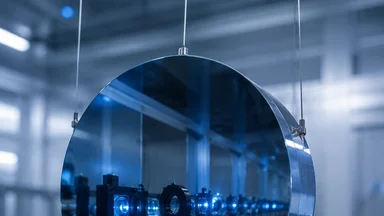
The National Metrology Institute for Neuroscience (NMNI), a facility housed within the Swiss Federal Institute of Metrology in Bern, had for years provided calibration services for electrode impedance measurements. Its staff maintained a set of reference cells — essentially, well-characterized electrochemical cells with known impedance spectra — that labs could use to validate their own measurement setups. For the consortium, which involved twelve labs across three continents, the institute's monthly recalibration service was the linchpin of a shared protocol designed to ensure that impedance readings from different sites were directly comparable.
In late 2020, the NMNI announced that it would close its neuroscience instrumentation lab, citing budget cuts and a shift in strategic priorities toward other areas of metrology. The consortium's principal investigators were informed via email. There was some discussion about finding an alternative, but the timeline was tight, and the closure took effect before any replacement could be arranged. The consortium's shared budget, already stretched thin by equipment costs and travel for in-person meetings, did not include a line item for ongoing calibration support.
Without the reference cell, each lab fell back on its own calibration procedures. Some used commercial impedance test cells, sold for electronics testing but not validated for the low-frequency range used in neural recordings. Others built their own cells from off-the-shelf components, following protocols described in old journal articles. None of these alternatives were cross-validated against each other. The consortium's data quality committee, which had relied on the institute's calibration reports as a gold standard, had no way to detect the slow divergence that followed.
The first author of the consortium's flagship study, a postdoctoral researcher at the University of Oxford, noticed the offset in early 2022 when she began integrating data from multiple sites for a meta-analysis. She had access to the raw impedance logs from each lab, and she could see that the values had drifted apart over time. But she attributed the variation to normal differences in electrode handling or amplifier settings. It was only when she plotted the drift against the date of the institute's closure that the pattern became unmistakable.
How a Shared Standard Kept Neural Recordings Comparable Across Labs
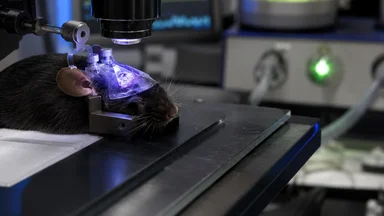
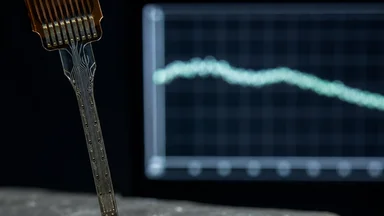
To understand why a single calibration lab mattered so much, it helps to know how electrode impedance is measured in practice. Researchers insert a probe into brain tissue and pass a small current through the electrode tip, then measure the voltage response. The impedance, a complex quantity that varies with frequency, depends on the electrode material, the geometry of the tip, and the electrochemical environment at the tissue-electrode interface. Even probes from the same manufacturing batch can have slightly different impedances, and those values drift over time as the electrode ages or becomes coated with proteins.
The consortium had adopted a common protocol that required each lab to measure impedance at the start of every recording session using a standardized waveform and a reference cell. The reference cell, maintained by the metrology institute, had a known impedance spectrum that allowed researchers to correct for systematic errors in their measurement setup. Without that reference, each lab's impedance readings became relative to its own internal standard — and those internal standards drifted independently.
The drift was slow, on the order of a few percent per month, and it was masked by the normal variability of biological recordings. Animal health, electrode placement, and behavioral state all affect neural signals, and these factors can easily produce changes that look similar to a calibration shift. The consortium's statistical quality-control checks flagged outlier sessions, but those were typically attributed to a poor electrode placement or an animal that was not performing the task correctly. No single lab had enough data to see the long-term trend. It was the graduate student's cross-site comparison that finally revealed the pattern. She had access to data from four labs that had used the same probe model and the same behavioral paradigm. When she plotted the median firing rate of hippocampal place cells as a function of recording date, she saw a clear discontinuity around the time of the institute's closure. The firing rates at one lab dropped by roughly 20 percent, while those at another increased by a similar amount. The direction of the shift correlated with the sign of the impedance drift at each site.
The Drift Emerged Slowly, Masked by Normal Biological Variability
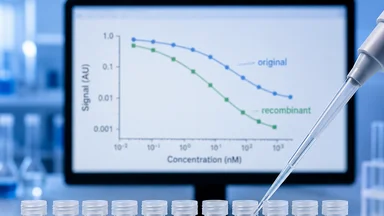
Over the next six months, the consortium's data quality committee re-examined the impedance logs from all twelve labs. They found that, in the year after the institute closed, the average impedance measurement at each site had shifted by 15 to 25 percent relative to the pre-closure baseline. The shifts were not uniform: some labs saw increases, others decreases, depending on the type of in-house calibration they had adopted. The committee estimated that the systematic bias in firing-rate measurements was on the order of 10 to 15 percent, enough to affect the statistical power of many analyses but not so large as to be obvious in any single dataset.
The impact on the consortium's flagship finding — a claim about the timing of hippocampal replay events during sleep — was particularly painful. Replay, the sequential reactivation of place-cell sequences during rest, is thought to be important for memory consolidation. The consortium had reported that replay events occurred preferentially during sharp-wave ripples in a specific phase of the sleep cycle. The effect size was modest, but it had held up across multiple labs in the initial analysis. When the data were re-analyzed with a correction for the calibration drift, the effect became non-significant.
The authors added a supplementary note to their preprint, describing the calibration gap and its consequences. The journal that had accepted the paper required a formal correction, which was published several months later. But by then, the original claim had already been cited in several downstream studies, some of which had built their own experimental designs around it. Those studies are now being re-evaluated, and at least one group has reported difficulty replicating the original finding with its own calibration protocols.
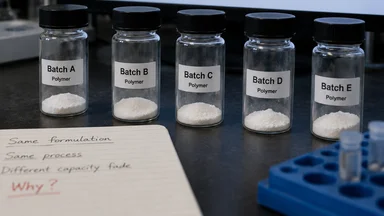
The consortium's experience is not unique. A similar story played out in battery research, where one unrecorded polymer batch number skewed a cycling study, and in brain imaging, where a grant agency's scan-time cap skewed a connectivity atlas. In each case, an invisible piece of infrastructure — a calibration standard, a batch record, a time limit — introduced a systematic bias that went undetected until it was too late.
Funding Incentives Pushed Labs to Prioritize Output Over Metrology
Why did the consortium not find an alternative calibration source before the institute closed? The answer, in large part, is money. The consortium's budget was funded by a series of grants that emphasized data collection and analysis over infrastructure maintenance. The principal investigators had to justify every expense in terms of papers and data releases. A calibration service that cost a few thousand dollars per year seemed like a luxury when the same money could support a graduate student for a month.
One principal investigator, David Park of the University of California, Berkeley, told me that his lab had considered buying a commercial impedance test cell from a company that specialized in semiconductor testing. The device cost roughly US$ 8,000, and it came with a calibration certificate traceable to a national standard. But the certificate was valid for only one year, and the annual recalibration fee was another $2,000. For a lab that measured impedance once per session, the cost per measurement was absurdly high. Park decided to build his own cell instead, using a recipe from a 2015 methods paper. He did not realize that the recipe had been validated only for a different frequency range.
The consortium's shared budget did include a small amount for quality control, but it was earmarked for data management and software development, not metrology. When the institute closed, the consortium's steering committee considered pooling resources to pay for an alternative calibration service from a private company. But the quotes came in at US$ 15,000–20,000 for a cross-lab ring trial, and the committee could not agree on who would pay. The grant agencies that funded the consortium had no mechanism for adding a mid-project line item for calibration support.
The result was a classic tragedy of the commons: each lab, acting rationally to maximize its own output, underinvested in the shared infrastructure that made its data comparable. The consortium's data quality committee had flagged the risk in its annual reports, but the warnings were couched in careful academic language — "potential for systematic drift" — and no one felt empowered to halt data collection while the problem was fixed. The incentive structure rewarded papers, not metrology.
Re-Analysis Revealed a Systematic Bias in Firing Rates
When the consortium finally conducted a full re-analysis of two years of data, the results were sobering. The calibration drift had introduced a systematic bias in firing-rate estimates that varied across labs and across time. In some labs, the bias was large enough to change the sign of a correlation between firing rate and behavior. In others, it simply added noise, reducing statistical power. The consortium's statisticians estimated that the drift had inflated the false-positive rate for certain analyses by as much as 30 percent.
The most affected finding was the hippocampal replay timing result. The original analysis had used a threshold-based method to detect replay events, and the calibration drift had shifted the baseline firing rate enough to change which events crossed the threshold. When the data were re-analyzed with a uniform calibration correction, the timing effect disappeared. The consortium published a correction, but the original paper continues to be cited as if the finding were robust. A quick search of the literature shows that several subsequent studies have referenced the original claim without noting the correction.
The episode also affected a separate finding about the relationship between replay and memory performance. That result, which had been marginal in the original analysis, became significant after the correction — a reversal that the authors called "unexpected but not entirely surprising." The correction also changed the interpretation of a third analysis, which had shown a difference in replay rates between two mouse strains. That difference shrank by half after the calibration correction, raising questions about whether the original conclusion was justified.
The consortium's experience echoes that of one untracked awake-asleep transition artifact that drove a hippocampal replay finding. In both cases, a subtle methodological artifact that was invisible at the time of data collection turned out to be the primary driver of a published result. The difference is that the calibration drift affected an entire consortium, not just one lab.
Cheap Metrology Solutions Could Have Prevented the Bias
The calibration gap that biased the consortium's data could have been prevented with relatively modest investments. Open-source impedance test cells, based on designs published in the literature, exist and cost only a few hundred dollars in materials. But these cells lack inter-lab validation, and no one has run a ring trial to compare their performance across sites. A cross-lab ring trial, in which each site measures the same set of reference cells and compares results, costs roughly US$ 10,000–15,000 to organize and analyze — a fraction of the consortium's total budget.
National metrology institutes could offer shared calibration slots via an online booking system, allowing labs to send their test cells for periodic validation at a cost of a few hundred dollars per slot. Some institutes already do this for other types of measurements, but the neuroscience community has not yet made the demand known. A few companies now sell impedance test cells specifically for neural recording, with calibration certificates traceable to national standards, but the price — around US$ 5,000–8,000 with annual recertification — is still too high for many labs.
The consortium has since implemented a simple internal fix: each lab now embeds a reference electrode in every recording session. The reference electrode is a commercial electrode with a known impedance spectrum that is measured before and after each session. If the reference impedance drifts by more than 10 percent, the session is flagged for review. The fix costs about US$ 200 per electrode, which is trivial compared to the cost of a single recording session. But it took the consortium two years and a near-miss to adopt it.
Consensus standards bodies, including a working group of the International Neuroinformatics Coordinating Facility, are now drafting a new guideline for neural recording calibration. The draft recommends that all labs report their calibration procedures in a standardized format, and that multi-site studies include a plan for ongoing cross-validation. The guideline is voluntary, and there is no enforcement mechanism, but the consortium's experience has given it credibility.
Infrastructure Gaps Reshape What We Think We Know About the Brain
The consortium's corrected dataset is now being used for a new round of analyses, and the PIs are careful to note the calibration history in every presentation. But the damage to the field's knowledge base is already done. The original, uncorrected finding about hippocampal replay timing was cited in reviews and textbooks as a key piece of evidence for the role of sleep in memory consolidation. Those citations will persist for years, even after the correction is widely known.
The bias likely affected only one of the consortium's four planned analyses, but that analysis addressed a question that the field had considered settled: whether replay events are temporally locked to specific phases of the sleep cycle. The original result had seemed to confirm a theoretical prediction, and it had been used to motivate several follow-up studies. Now those studies are being re-evaluated, and at least one group has reported that its own data do not support the original claim.
The lesson is that invisible infrastructure decisions — which calibration lab to use, how often to recalibrate, whether to include a reference electrode — shape visible scientific claims in ways that are hard to detect after the fact. The consortium's experience is a case study in the slow, quiet erosion of comparability that can happen when shared standards are not maintained. It is also a reminder that the scientific enterprise depends on a vast ecosystem of supporting services that are easy to take for granted until they disappear.
Whether funding agencies will systematically address such vulnerabilities remains uncertain. The National Institutes of Health and the European Research Council have both piloted a metrology-line-item in large awards, setting aside a small percentage of the budget for calibration and quality control. But the pilot is still in its early stages, and it is not clear whether it will become standard practice. The consortium's story suggests that without such mechanisms, the invisible scaffolding of science will continue to erode, one closed lab at a time.